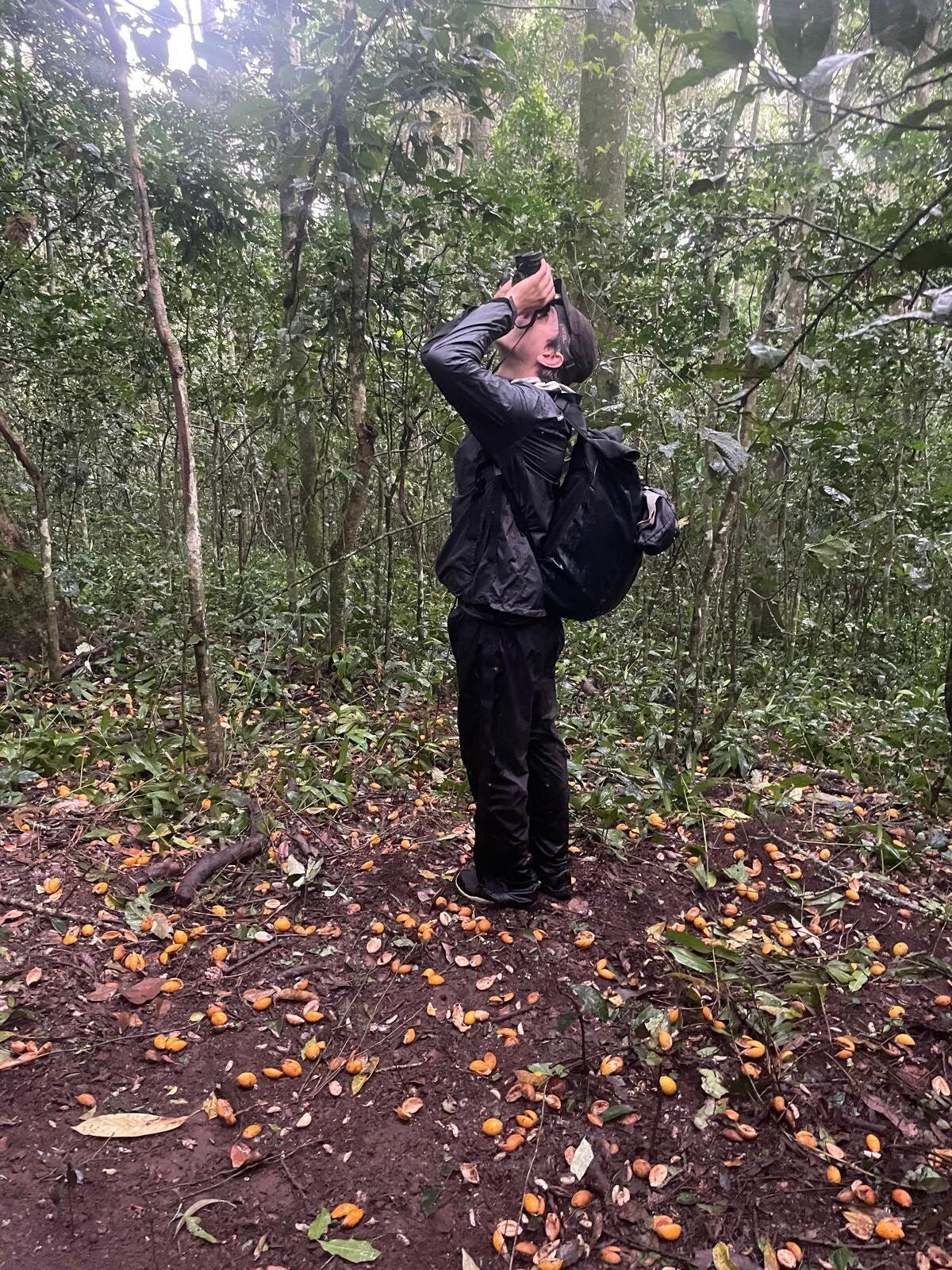
Aleksey Maro spent part of last August sleeping under trees in Uganda’s Kibale National Park, holding a plastic bag on a forked stick, waiting for chimpanzees to urinate on him.
This is what graduate school looks like sometimes.
The target was the Ngogo community of Pan troglodytes schweinfurthii, eastern chimpanzees who have been observed and individually identified by researchers for over three decades. Maro, a UC Berkeley graduate student working with biologist Robert Dudley, needed urine. Not because anyone finds that particularly enjoyable, but because urine is the only practical way to answer a question that has been circling primate biology for years: are wild chimpanzees actually metabolizing significant quantities of alcohol from the fermented fruit they eat?
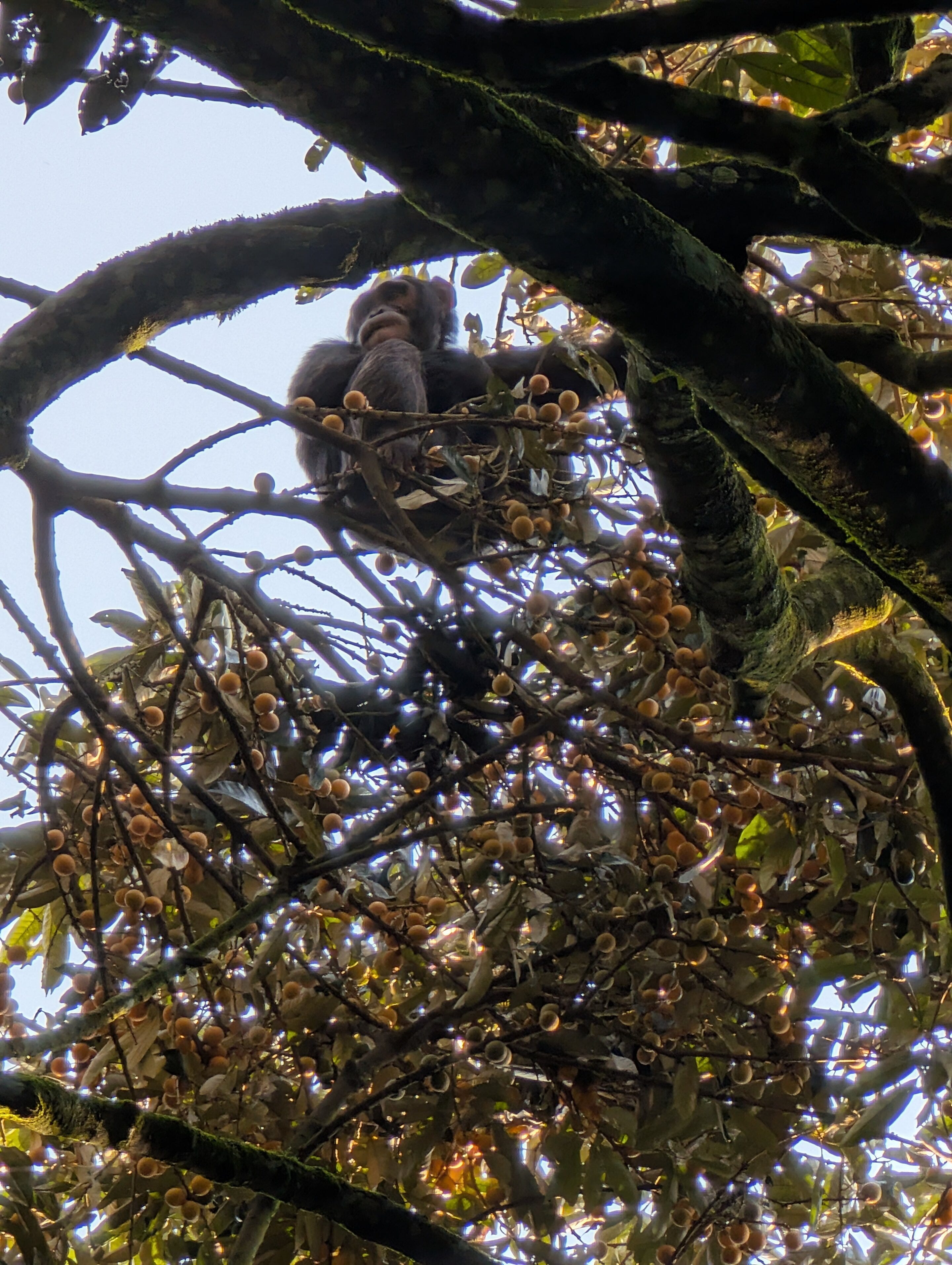
The answer, according to a paper just published in Biology Letters,1 is yes. Decisively.
Of 20 urine samples collected from 19 individually identified chimpanzees, 17 tested positive for ethyl glucuronide (EtG) at a threshold of 300 nanograms per milliliter. Ten out of 11 samples tested at the higher threshold of 500 ng/ml also came back positive. In clinical and forensic contexts for humans, 500 ng/ml is the cutoff used to rule out incidental or accidental alcohol exposure. Exceeding it means you drank. The chimps exceeded it.