
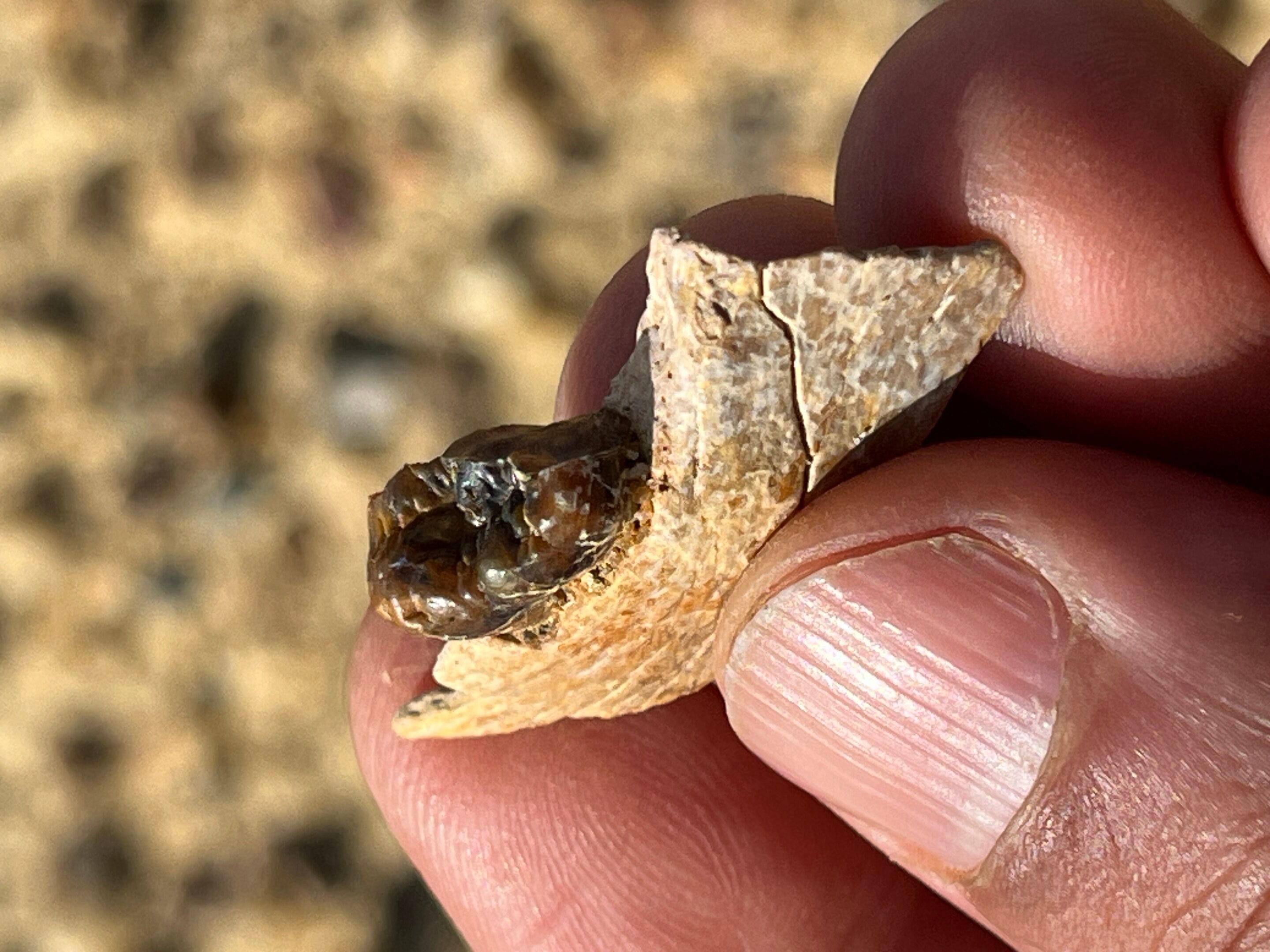
The specimen is a lower jaw. No skull, no limb bones, nothing postcranial at all. And yet this fragment of mandible from the Egyptian desert is enough to shift the presumed birthplace of every living ape on the planet.
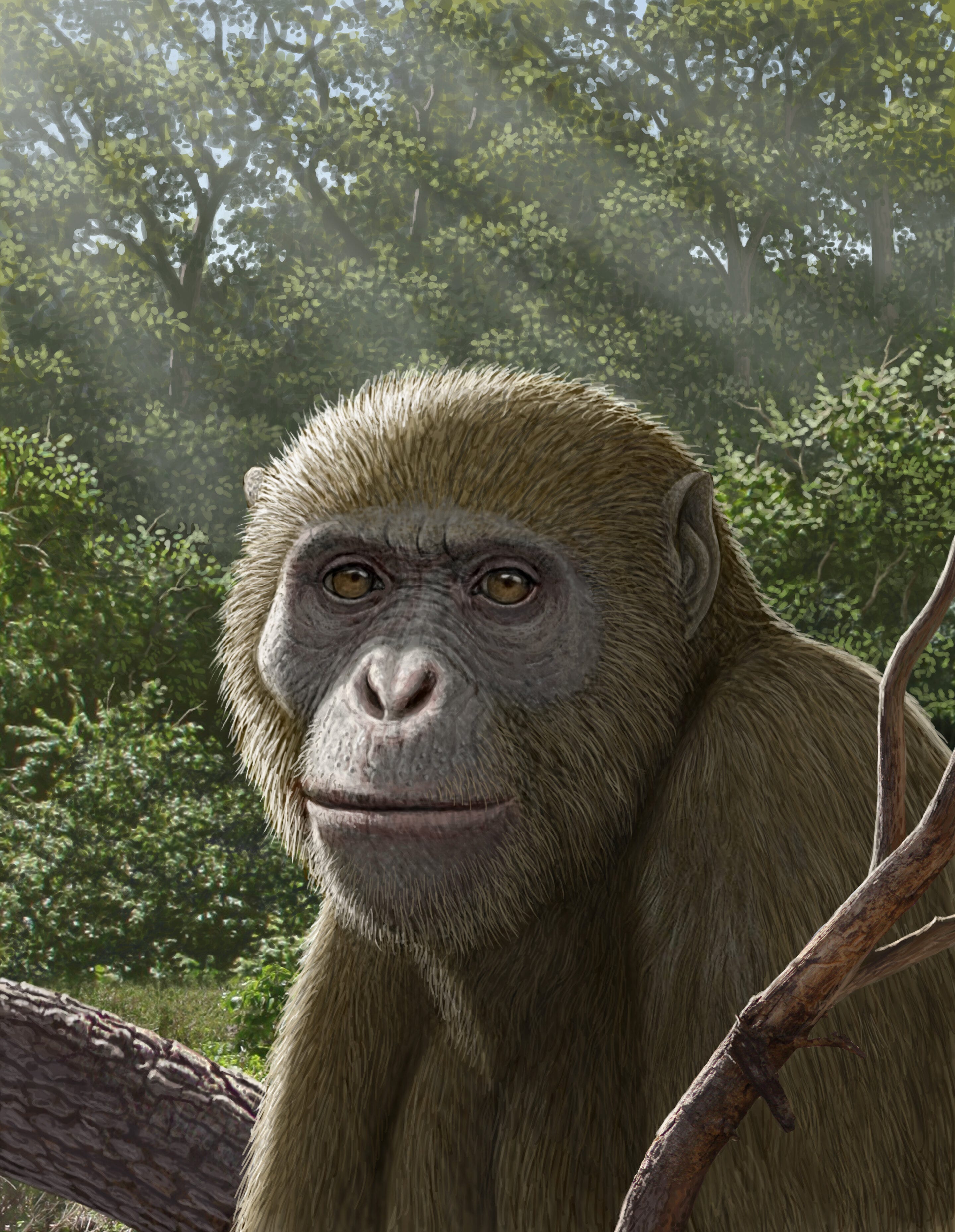
Masripithecus moghraensis was recovered from Wadi Moghra, a fossil site in northern Egypt, during fieldwork in 2023 and 2024 by the Sallam Lab team from Mansoura University. The animal lived roughly 17 to 18 million years ago, in the Early Miocene. What the description in Science1 makes clear is that this is the first unambiguous fossil ape from North Africa. That gap in the record had gone mostly unremarked, because nobody had a good way to explain it. Now the explanation looks obvious in retrospect: nobody was looking in the right place.
What the teeth say
The jaw preserves enough to be diagnostic. The canines and premolars are notably large. The molars have rounded, heavily textured chewing surfaces. The whole structure is robust. Working from this anatomy, the research team interprets Masripithecus as a dietary generalist: primarily frugivorous, but built to crack harder foods when fruit was scarce.
Masripithecus reconstruction video. Credit: Professor Hesham Sallam
That dietary profile is not unusual for an ape. What is unusual is the geography and the timing. The Early Miocene was a period of climatic flux. Northern Africa and Arabia were becoming more seasonal. For an ape to have persisted this far north, flexibility would have been a genuine advantage. The anatomy of Masripithecus looks like exactly that kind of solution.
Masripithecus sculpting video, sculpting by Mohammed Hebeish. Credit: Professor Hesham Sallam
The genus name combines Masr, the Arabic word for Egypt, with the Greek píthēkos, meaning ape. The species name honors Wadi Moghra itself. Transparent and practical.
A missing piece hiding in plain sight
Early Miocene ape fossils have historically clustered in East Africa. Sites in Kenya, Uganda, and Tanzania have been the primary source of hominoid material for decades, and the field’s picture of where early ape evolution took place has been shaped accordingly. North African sites of comparable age had turned up cercopithecoid monkeys, but no apes. The prevailing interpretation was that apes simply hadn’t gotten there yet.
Masripithecus complicates that story considerably.
The team placed the new species in phylogenetic context using a Bayesian tip-dating analysis that combined morphological data from living and extinct apes, molecular data from living species, and the geological ages of fossils. The result positions Masripithecus closer to crown Hominoidea than any of the coeval East African fossil apes. Crown Hominoidea is the group containing all living apes and their last common ancestor: gibbons, orangutans, gorillas, chimpanzees, and humans.
That finding has direct implications for where crown Hominoidea originated. Erik Seiffert, a paleontologist at the University of Southern California and co-author of the study, put it plainly: “For my entire career, I considered it probable that the common ancestor of all living apes lived in or around East Africa. But this new discovery, and our new and novel analyses of hominoid phylogeny and biogeography, now strongly challenge that idea.” He has also noted that the strength of the biogeographic scenario does not actually depend on Masripithecus alone, but that the new fossil is very much consistent with it.
The biogeographic analyses point toward northeastern Afro-Arabia as the most probable ancestral homeland. During the Early Miocene, the African and Arabian plates were in their final phase of collision with Asia. Fluctuating sea levels periodically opened land connections across what is now the eastern Mediterranean and Middle East. This region functioned as a corridor. Animals could move through it when conditions allowed.
Masripithecus, positioned where it is phylogenetically, represents a link between the African fossil record and the Eurasian one. Hominoid fossils appear in Europe and Asia from the Middle Miocene onward, and the question of where those animals came from has generated sustained debate. The Egyptian ape does not resolve that debate entirely, but it fills a gap that had been invisible. The corridor was not empty. It had apes in it.
The problem with only looking where the fossils are
The deeper issue this raises is methodological. Paleontology works with what it has, and for decades what it had was concentrated in East Africa. That is partly because East Africa is genuinely rich in fossil hominoids, and partly because sustained fieldwork there has built the infrastructure, expertise, and permit histories that attract more fieldwork. North Africa, by contrast, was less systematically explored for Miocene hominoids. Absence was treated as data when it was likely a sampling artifact.
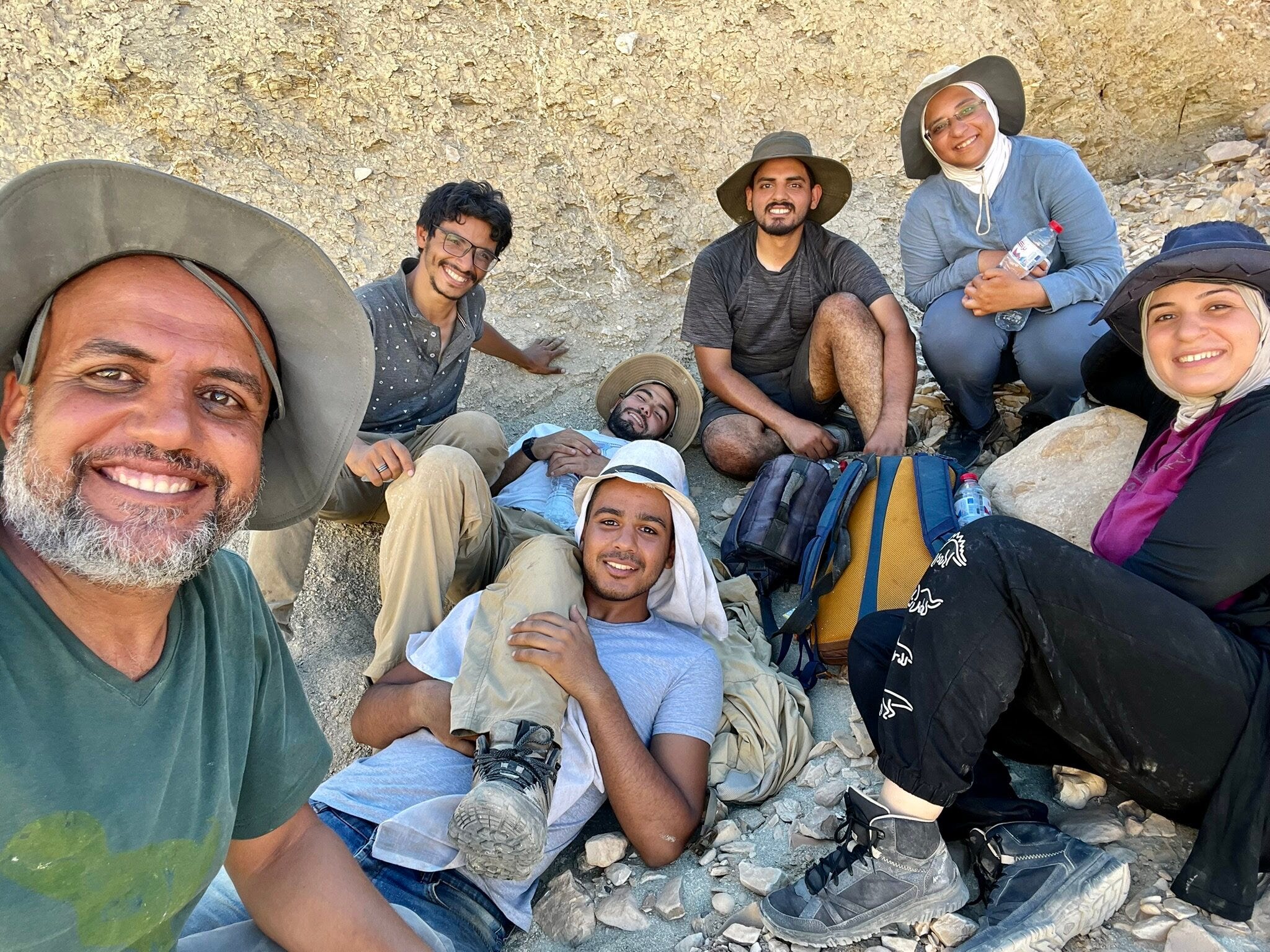
Sallam’s team spent five years looking for this material. The payoff is not just a new species. It is a reorientation of the question itself. If the common ancestor of living apes lived in northeastern Afro-Arabia, and if that region has been chronically underexplored, then the actual shape of early hominoid diversification may look substantially different from what the current fossil record suggests.
There is more to find. The Wadi Moghra jaw is a reminder that a blank space on a distribution map is not the same thing as an empty landscape.
Al-Ashqar, S.F., et al. (2026). An Early Miocene ape from the biogeographic crossroads of African and Eurasian Hominoidea. Science. DOI: 10.1126/science.adz4102


