

On June 24, 2015, something odd happened at Ngogo.
Two clusters of Pan troglodytes — chimpanzees who had shared the same territory, groomed each other, hunted together, and fathered offspring with the same females — approached one another near the center of their home range. They had done this countless times before. Fission-fusion sociality is the default mode for chimpanzees; groups split and reform constantly across the day. What should have happened was a reunion. Instead, the Western chimpanzees ran. The Central chimpanzees chased them. Then for six weeks, the two groups avoided each other entirely.
That had never been observed before in 20 years of continuous monitoring at Ngogo.
What followed over the next nine years is documented in a paper published this week in Science1 by Aaron Sandel, John Mitani, Kevin Langergraber, David Watts, and colleagues: the largest-ever recorded chimpanzee community fracturing permanently into two rival groups, followed by sustained lethal violence in which the smaller group killed at least seven adult males and 17 infants from the larger one. The team drew on 30 years of demographic records, 24 years of social network data, and a decade of GPS tracking. It is, by any measure, an extraordinary longitudinal dataset.
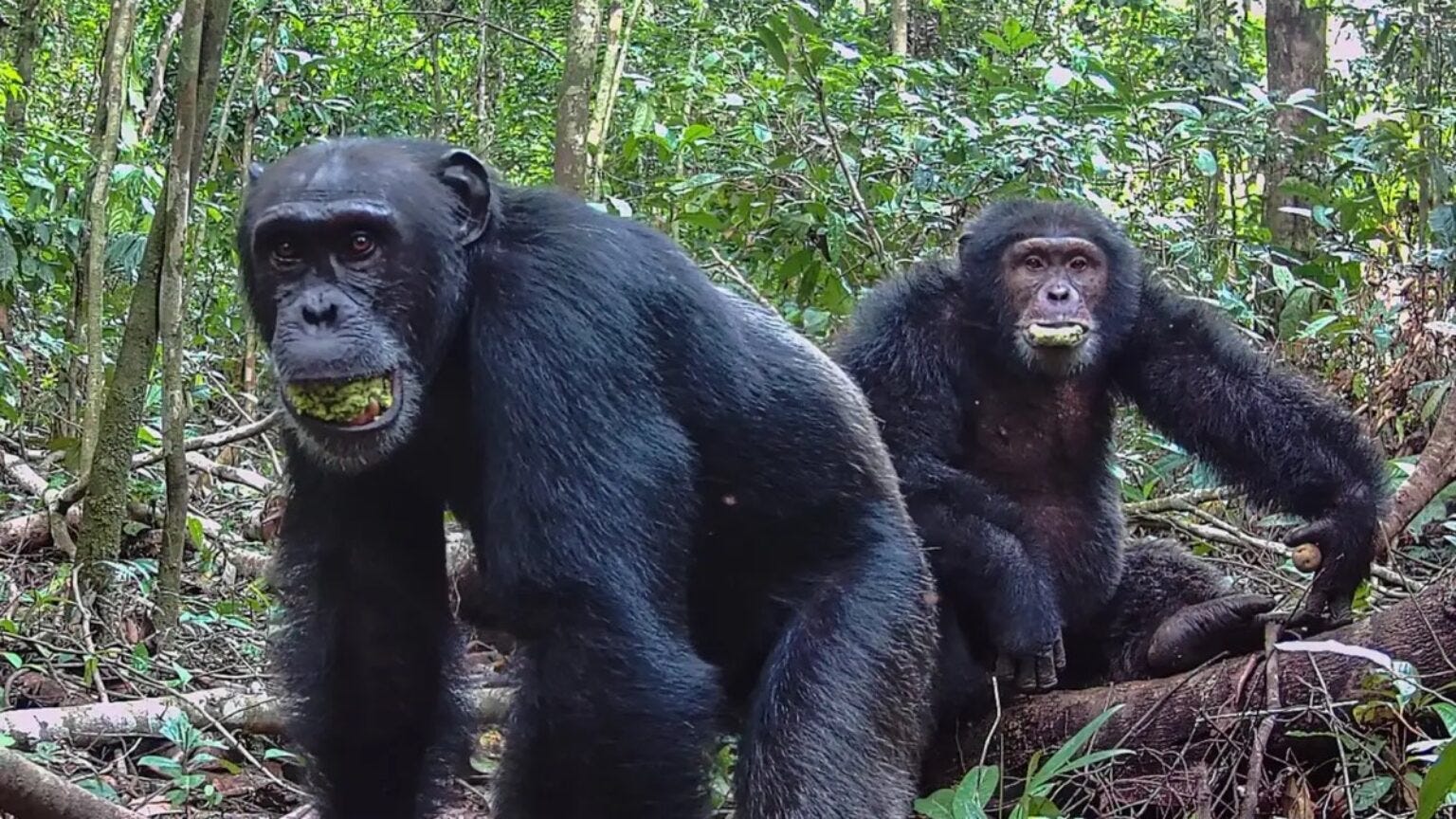
The Ngogo chimpanzees had been a single community since continuous research began in 1995. By the time the dataset opens, they numbered well over 100 individuals and would eventually peak near 200 — far larger than typical chimpanzee communities. Social network analyses using the Leiden algorithm revealed two loosely defined clusters, Western and Central, throughout this period, but cluster membership was fluid. About 29% of individuals switched clusters from one year to the next. Forty-four percent of infants born between 2004 and 2014 were conceived by parents from different clusters. The whole group shared a single territory and a single reproductive pool. They were, by every meaningful measure, one community.
Then the network shifted.
Three independent statistical methods all flagged 2015 as the sharpest structural transition in the 24-year record. Modularity spiked. The two clusters stopped bleeding into each other. A change-point analysis for longitudinal network data identified the transition as statistically unambiguous. What had been a fluid, overlapping social structure crystallized into two distinct blocs. By 2017, the Western and Central chimpanzees occupied largely separate ranges. By 2018, there were no affiliative relationships between members of the two groups, and reproduction between them had ceased entirely. The last cross-group conception had occurred in March 2015 — almost exactly when the behavioral break first appeared.


