

Take two macaques. One is Macaca mulatta, the rhesus monkey — hierarchical, despotic by primate standards, where rank is steep, aggression is frequent, and lower-ranked individuals submit with elaborate, ritualized signals. The other is Macaca tonkeana, the Tonkean macaque from Sulawesi — living in looser, more egalitarian groups where affiliative contact is common, reconciliation after conflict is frequent, and the social environment is, paradoxically, less predictable. Same genus. Same basic brain plan. Diverged perhaps six to eight million years ago. And yet they live in social worlds that feel almost categorically different.
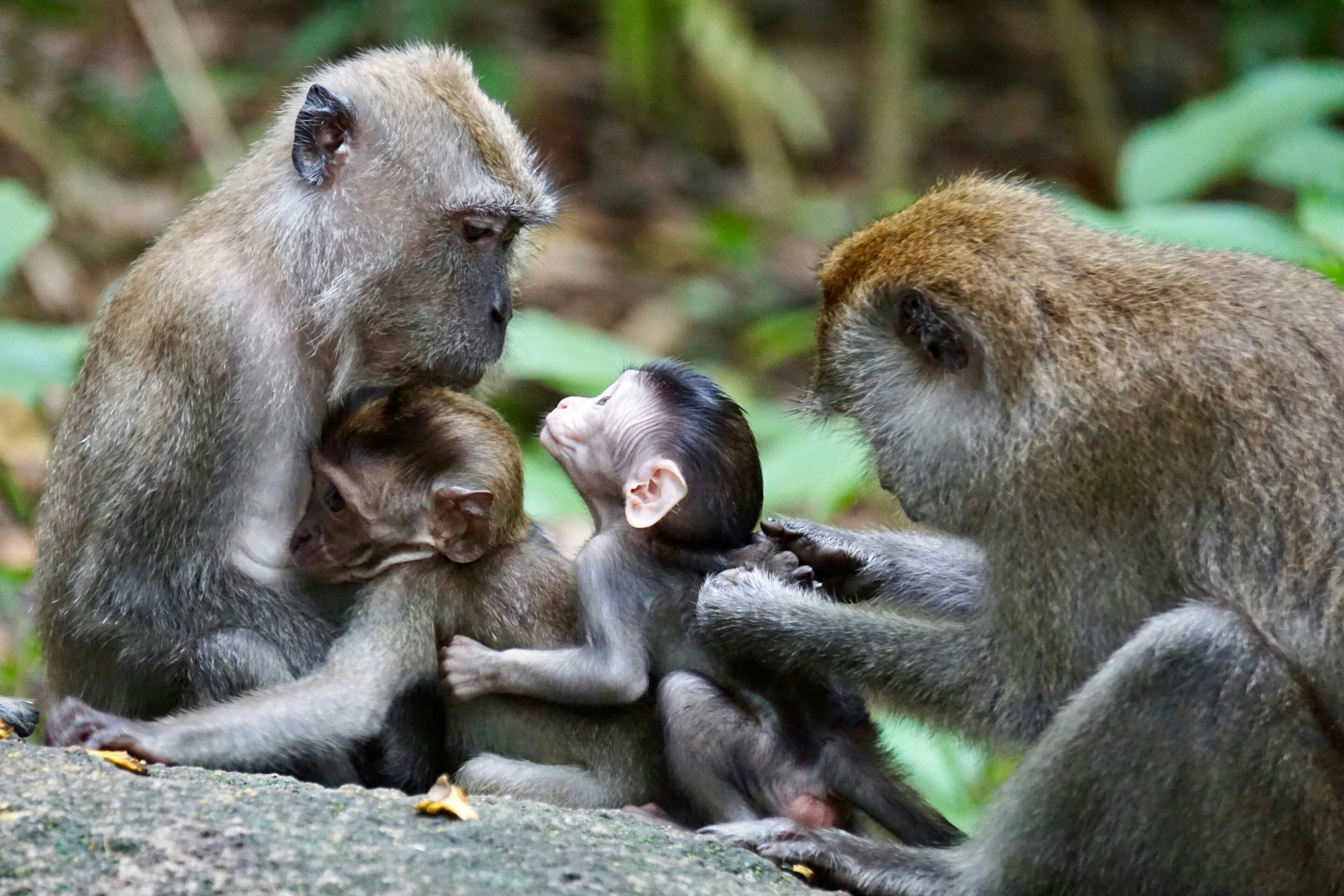
Primatologists have been sorting macaques into grades of social tolerance for decades, a framework developed by Bernard Thierry based on 18 behavioral traits that co-vary across species: how often individuals reconcile after fights, how steep the dominance hierarchy is, how willing adults are to share food, how much kin bias shapes social networks. Grade 1 species sit at the intolerant end. Grade 4 species are the most tolerant. It is a useful framework, though not without critics who point out that collapsing multidimensional social variation into a single axis loses important nuance.
What nobody had done, until recently, was scan enough macaque brains across enough species to ask whether these behavioral grades leave a mark on the brain itself.
A team at the University of Strasbourg has now done exactly that. Led by PhD student Sarah Silvère and senior author Sébastien Ballesta, the researchers assembled post-mortem MRI data from 42 individuals representing 12 Macaca species, spanning all four tolerance grades. Some brains came from open-access databases; others were newly scanned from animals that had died of natural or accidental causes at the Centre de Primatologie in Strasbourg, including two species, Macaca tonkeana and Macaca thibetana, that had never been imaged before. They focused on two subcortical structures: the amygdala and the hippocampus. Their results, published in eLife1 in 2026, overturn a tidy assumption about what the amygdala is for.


