

Pick up almost any popular book about human evolution written in the last thirty years and you’ll find the same comparative framework. On one side, the chimpanzee: violent, male-dominated, prone to lethal raids. On the other, the bonobo: sexually liberated, female-led, conflict-averse. The two species serve as evolutionary bookends, and Homo sapiens sits somewhere between them, presumably free to choose which nature to express.
It’s a compelling story. It also turns out to be significantly wrong.
A study published in Science Advances1 in March 2026 looked at aggression across 22 zoo-housed groups of Pan troglodytes and Pan paniscus — 189 individuals in total, observed across 16 European facilities spanning more than a decade of data. Led by Emile Bryon and colleagues from Utrecht University and the University of Antwerp, the team tracked both contact aggression (biting, wrestling, hitting) and non-contact aggression (charges, chases, displays). After running the numbers through Bayesian social network analyses that controlled for group size, sex ratio, and group identity, they found no meaningful difference in overall aggression rates between the two species. Not in total aggression. Not in physical contact aggression either.
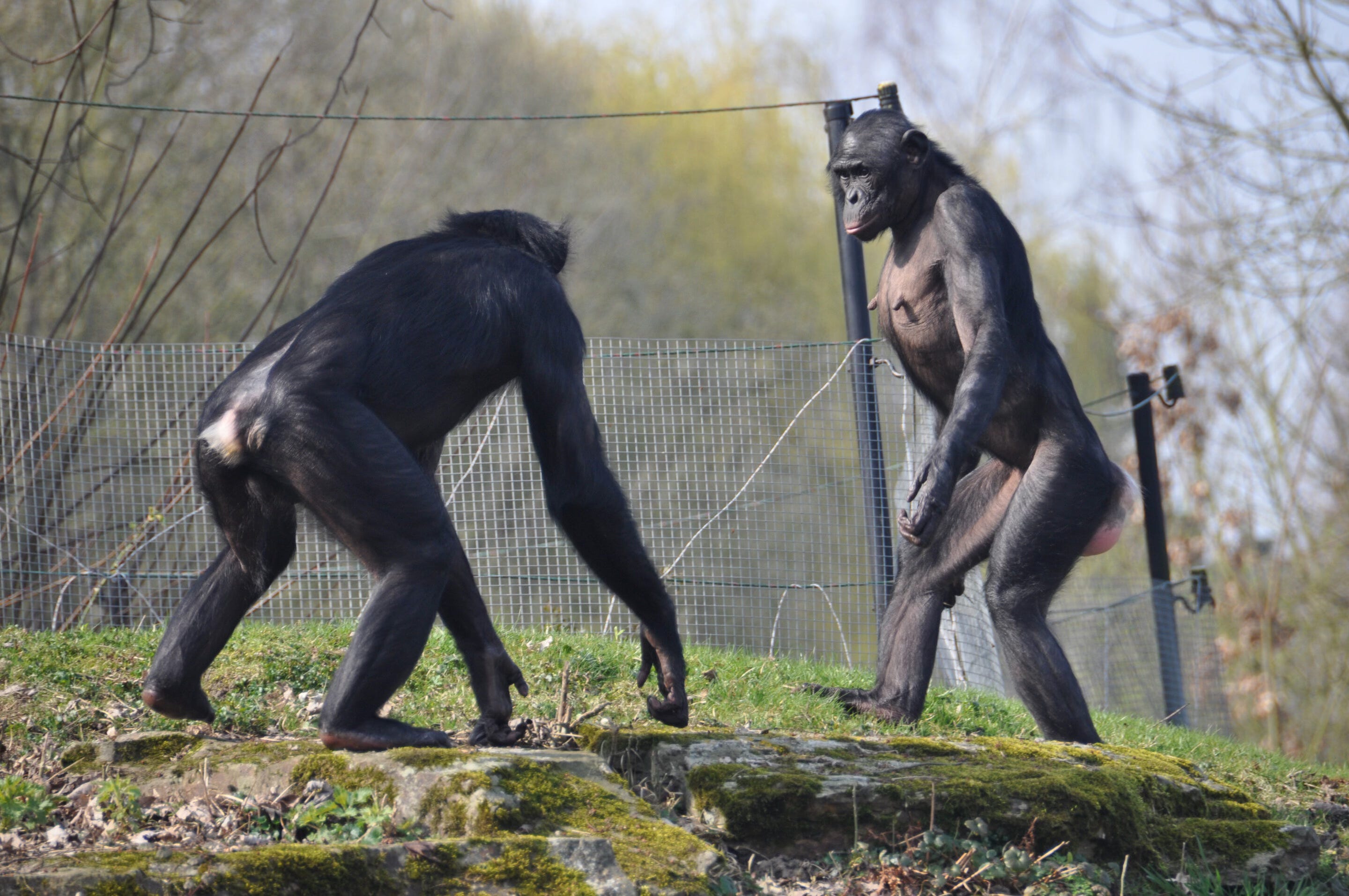
Chimpanzees are not more aggressive than bonobos. That’s the headline, and it’s worth sitting with for a moment.
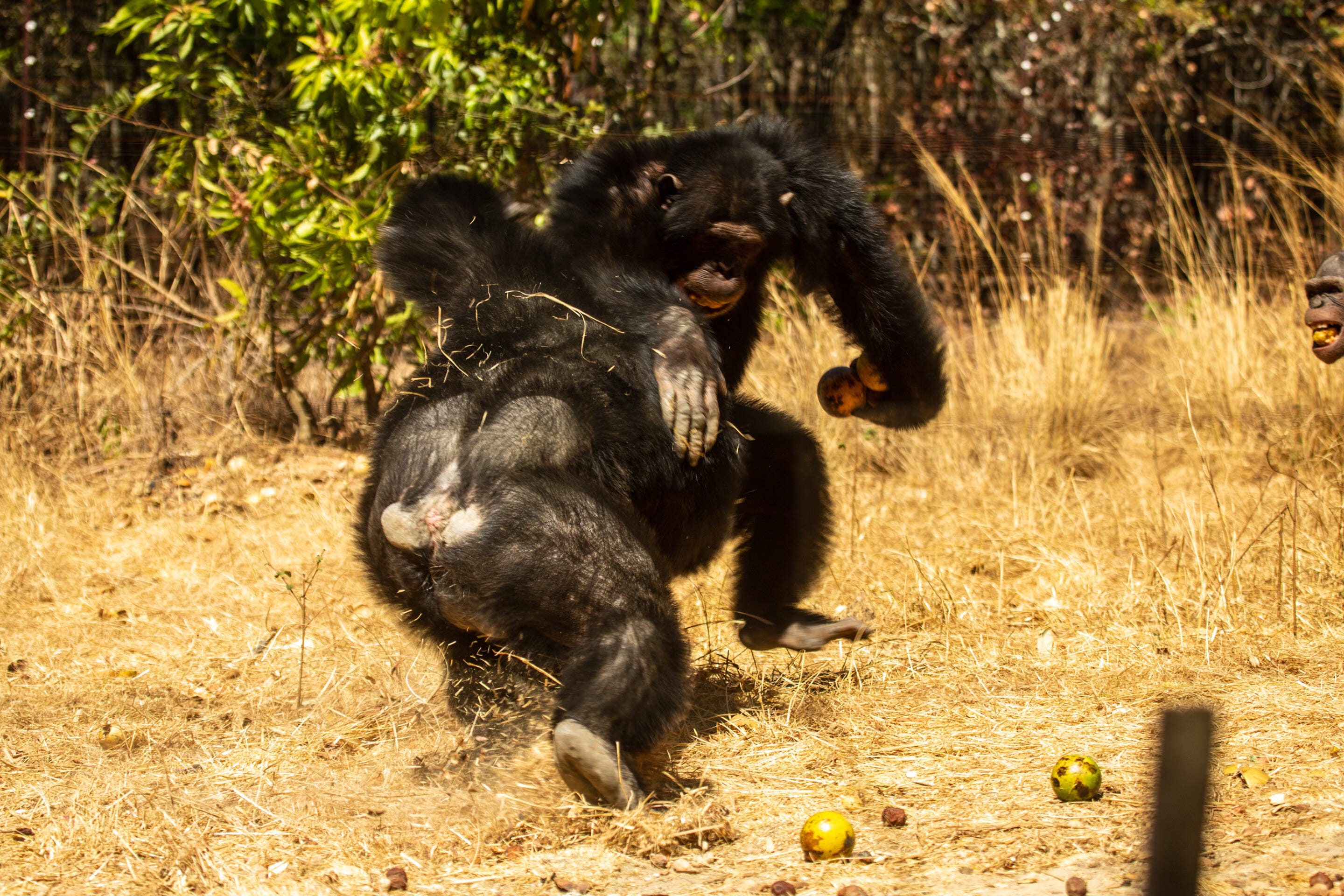
The bonobo-as-peacemaker image wasn’t invented out of nothing. It came largely from the work of Frans de Waal and others who documented bonobo sociality with genuine rigor, and it was reinforced by the striking contrast with chimpanzee behavior documented at sites like Gombe and Kibale. Chimpanzees engage in intergroup raids. They commit infanticide. Males form coalitions that sometimes kill other males. None of that has ever been documented in bonobos. So the idea of a fundamentally less aggressive bonobo species has had, until recently, some empirical grounding.
But recent field observations have started to complicate the picture. One study comparing wild populations found that bonobo males at Kokolopori in the Democratic Republic of Congo were actually more aggressive than chimpanzee males at Gombe, roughly three times as aggressive by some measures. Another study found the opposite, with chimpanzee males at Kalinzu showing higher rates of contact aggression than bonobos at Wamba. The conflicting results don’t mean the measurements were wrong. They mean the categories might be.


