

High in the canopy of Uganda’s Kibale Forest, a tiny chimpanzee lets go.
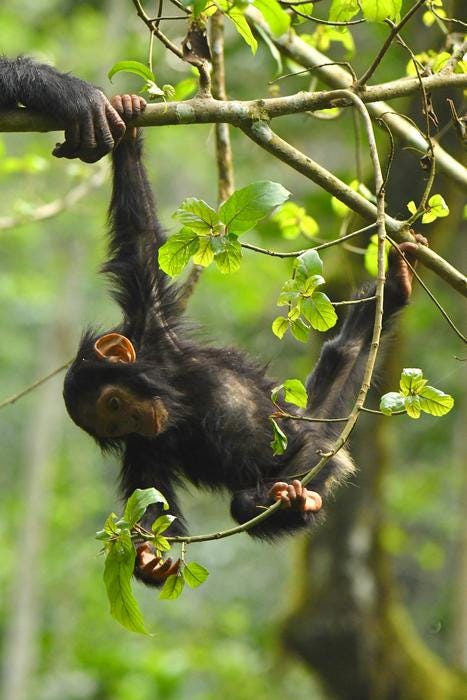
There is no branch in its hands. No careful testing of footing. Just a clean drop through open air before another limb catches the fall. To a human parent, it looks terrifying. To the researchers watching, it turned out to be the most revealing moment of all.
A new study in iScience1 shows that chimpanzee infants, not adolescents, are the biggest risk-takers in their society. The finding flips a long-held assumption about how risky behavior develops and offers a sharp new lens on what makes humans different.


