
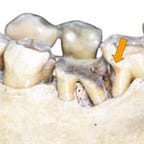
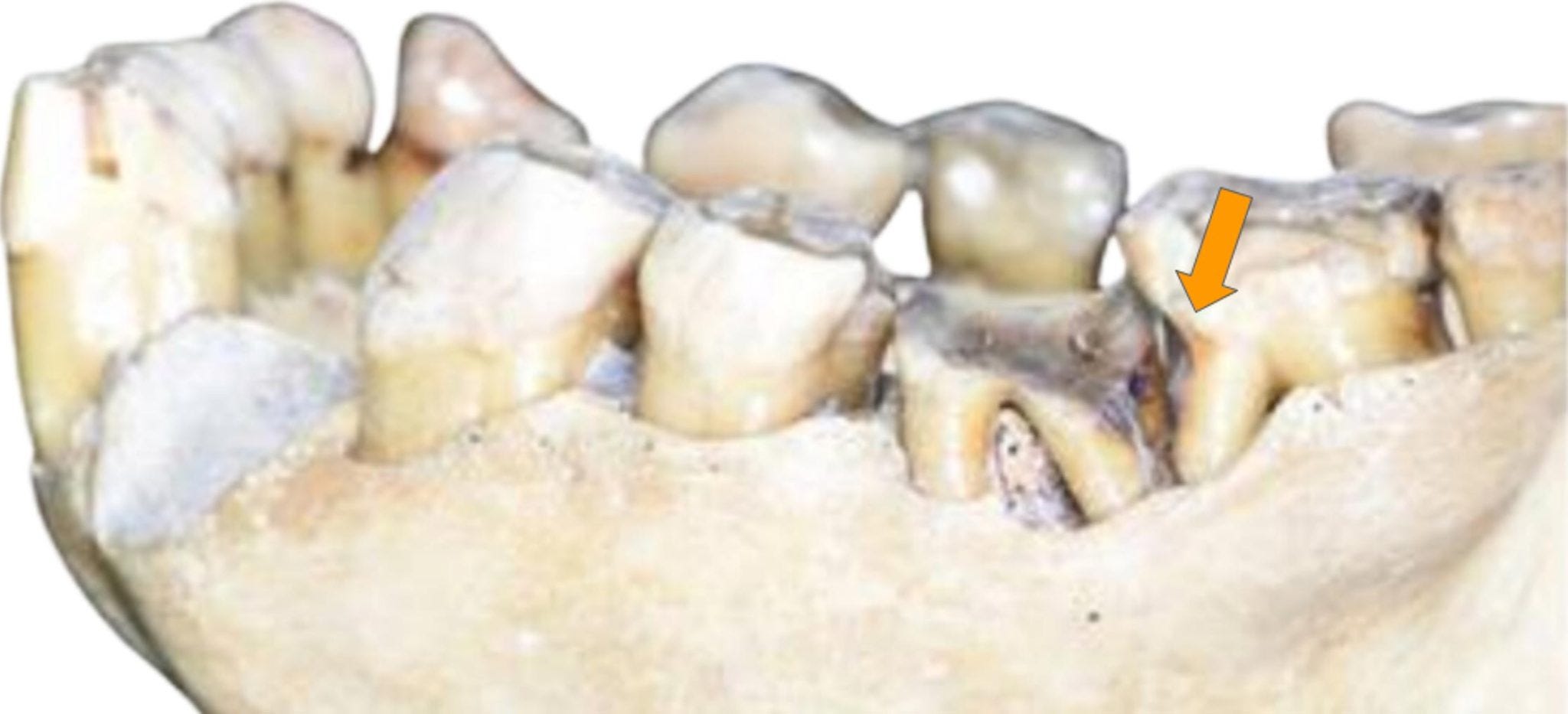
There are grooves on ancient human teeth that look like someone spent time working between their molars with a stick. Thin, scratched channels that run along exposed roots, often right where two teeth meet. For most of the past century, archaeologists called them toothpick grooves and treated them as evidence of deliberate behavior. Tool use. Maybe even hygiene. The marks show up on 2-million-year-old fossils. They show up on Neanderthals. They show up often enough that some researchers described toothpicking as one of the earliest human habits we can identify in the skeletal record.
A new study published in the American Journal of Biological Anthropology1 suggests that interpretation needs to be reconsidered. The team examined over 500 teeth from 27 species of primates, living and extinct, all from wild populations. They found grooves that look almost identical to the ones attributed to toothpicking in human fossils. Same shape. Same location. Same fine parallel scratches. But these primates were not using toothpicks.
The study also looked for a different kind of lesion. Deep, wedge-shaped notches that form near the gumline, known as abfraction lesions. These are common in modern dental clinics, often blamed on tooth grinding, aggressive brushing, or acidic drinks. Dentists see them constantly. But in the entire primate sample, the researchers found none. Not one.
So the marks we thought were cultural might be natural, and the marks we see all the time in humans might be uniquely ours.


