

In 1952, a Japanese ecologist named Kinji Imanishi wrote something that would take 72 years to reach most of the scientific world. Not because it was obscure or trivial, but because it was written in Japanese and because what it said made Western scientists uncomfortable. Imanishi argued that monkeys have culture.
He didn’t hedge. He didn’t qualify it as “proto-culture” or “culture-like behavior.” He created a new word, karachua, to describe learned, acquired behavior transmitted through groups with continuous social living. This was distinct from bunka, the Japanese word for human culture with all its trappings of language and music and art. But it was culture nonetheless.
“It is clear that we must recognize culture (karachua),” Imanishi wrote, “which we once considered as human lifestyle, in animals closely related to us, like monkeys and other mammals, at least to some extent.”
The paper sat untranslated until 2024. By then, the debate over whether primates have culture had consumed decades of scientific energy, cycled through multiple frameworks, and landed roughly where Imanishi started.
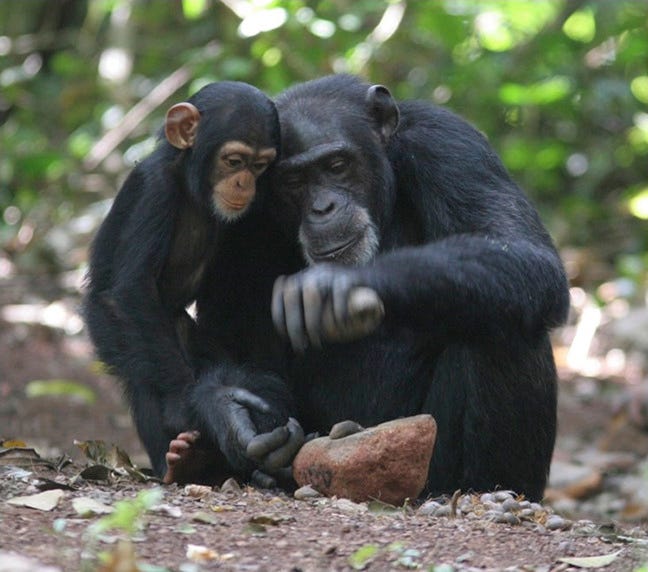
That gap matters. Not just as a historical footnote, but because it reveals how our own cultural assumptions shape what we’re willing to see in other species. The story of how scientists came to accept primate culture is also a story about disciplinary blindness, translation barriers, and the slow collapse of a boundary we desperately wanted to maintain.


