

A wild infant marmoset spent ten months living with a troop of black-striped capuchin monkeys in Brazil. It wasn’t tolerated. It was mothered. Two successive females took turns caring for it, and the rest of the group extended it the kind of casual acceptance usually reserved for their own infants. Nobody ate it. Nobody drove it off. It just became part of the troop.
That case sat buried in a 2006 paper for nearly two decades before a team led by Cyril Grueter at the University of Oxford pulled it into a much bigger picture. Grueter and his collaborators went looking for every documented instance they could find of primates forming friendly bonds with other species, combing scientific literature, media reports, and a survey sent to primatologists around the world. What came back was 427 cases spanning 88 primate species and 127 partner species, published this year in the journal Primates.1
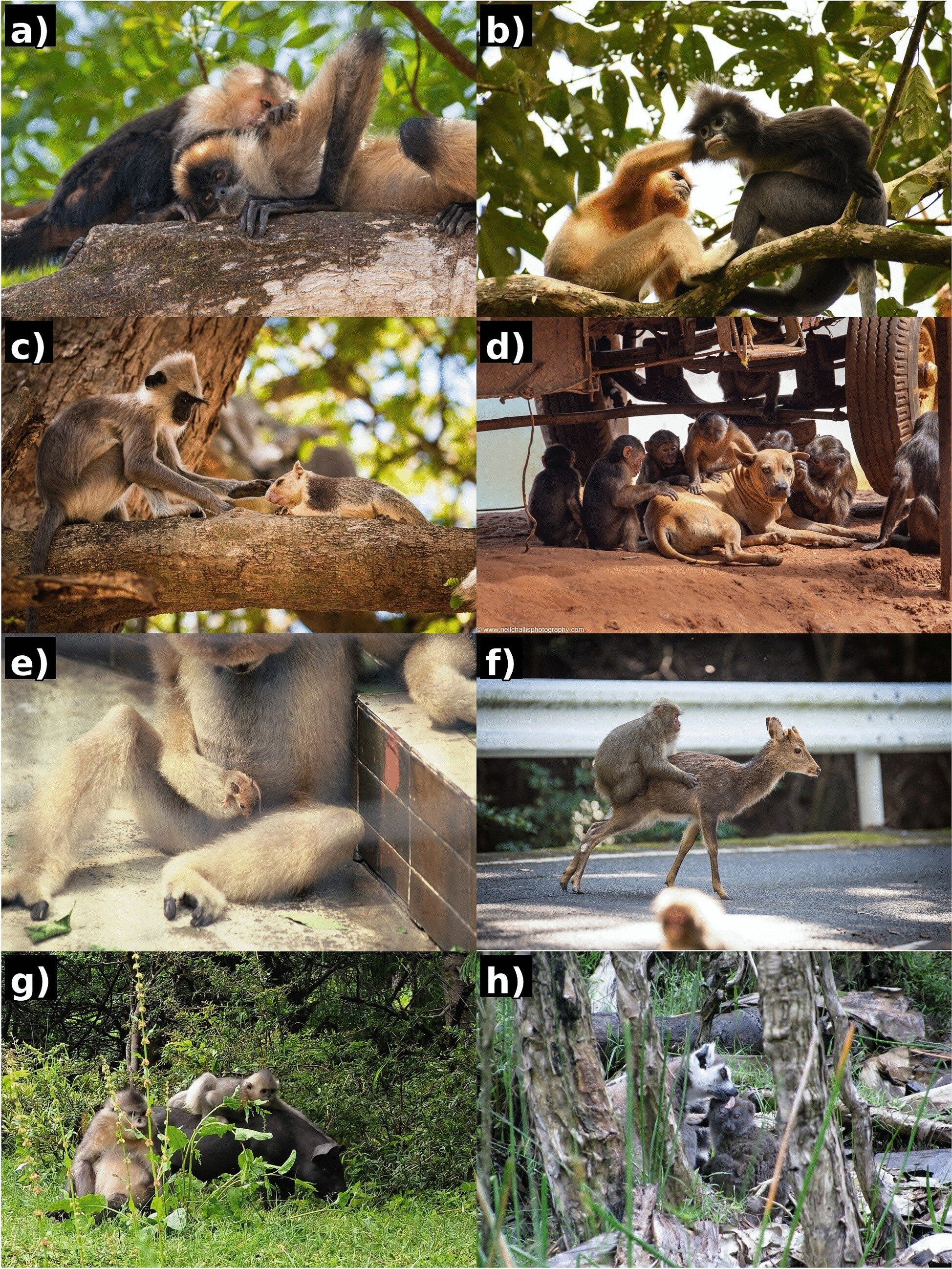
The pattern that emerges from all that data is stranger than it sounds at first. Stump-tailed macaques in Thailand groom domestic dogs at a temple. Tufted gray langurs in Sri Lanka stroke giant squirrels. Snub-nosed monkeys in China play with pigs. Ring-tailed lemurs in Madagascar groom bamboo lemurs that aren’t even their own species of lemur. None of this is required for survival. Nobody’s getting fed, warmed, or protected from predators by doing it. It just happens, over and over, across unrelated lineages and continents, as if something in primate social wiring keeps reaching past the boundary of species without being told to stop.


