

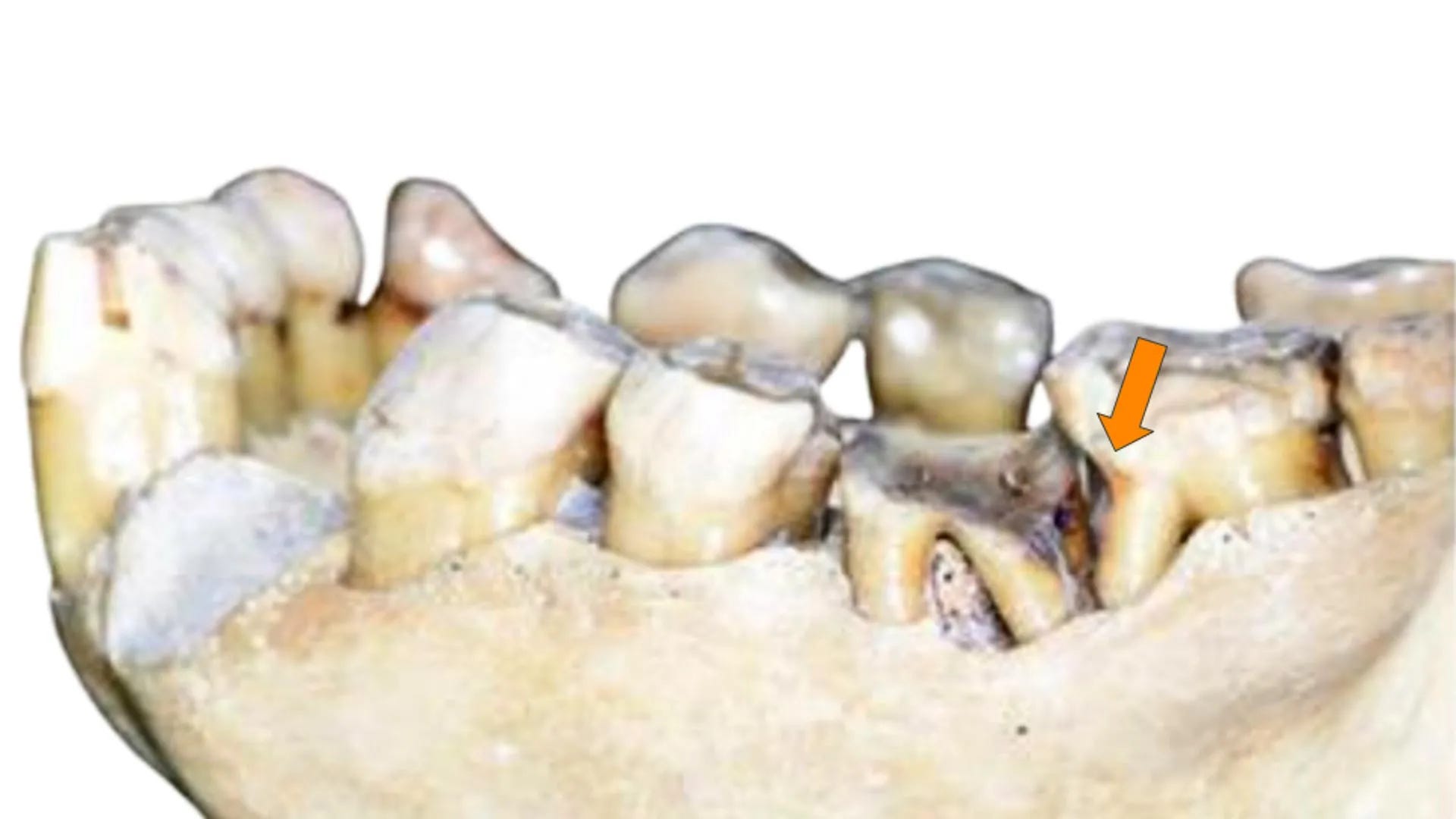
There is a groove in the fossil record. A small, tapered notch, worn into the root surface of a tooth between two neighboring teeth. Researchers have been finding these marks in ancient human dentitions for over a century, and for most of that time the prevailing explanation has been a tidy story: our ancestors were picking their teeth. Sticks, fibers, bone fragments, whatever was at hand. One paper a couple of decades ago called it the oldest hominid habit. The grooves show up in specimens more than two million years old, in Neanderthal dentitions, in medieval European samples. The narrative held.
A new study published in the American Journal of Biological Anthropology1 hasn’t destroyed that narrative, but it has made it considerably harder to defend. What Towle, Krueger, and colleagues found, after examining 531 individuals from 27 wild primate species, is that these grooves are not unique to Homo. Wild apes and monkeys can develop them too. That’s the complication. The more striking finding, though, is the absence: not a single primate in the sample showed abfraction lesions, those deep, wedge-shaped notches at the gumline that are among the most common dental problems treated in modern clinics. Whatever is causing them, it appears to be something specifically wrong with how we live now.


